Gear Basics · 2 min read
Hooks, Sinkers and Bobbers: The Terminal Tackle You Need
Hook sizes made simple, the types of sinkers and bobbers, and a short shopping list of terminal tackle for beginners.
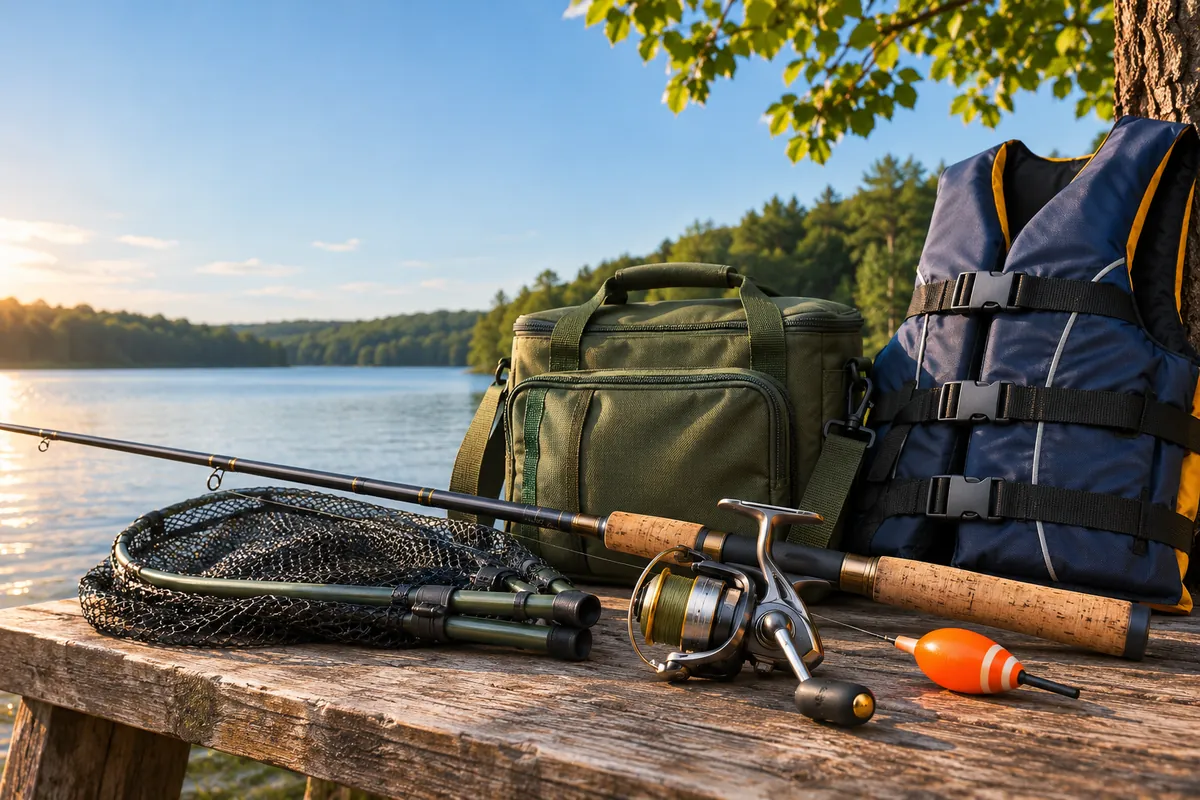
"Terminal tackle" is everything at the end of your line: hooks, sinkers, bobbers and swivels. A small box of each will cover most freshwater fishing.
Hook sizes are backwards
For small hooks, a bigger number means a smaller hook, so a size 10 is smaller than a size 6. After size 1, sizes switch to "aughts": 1/0, 2/0, 3/0 and so on, which get larger as the number rises.
- Bluegill and sunfish: size 6 to 10
- Crappie: size 2 to 6, often light-wire hooks
- Trout: size 8 to 12
- Bass with soft plastics: 1/0 to 4/0
- Catfish: 1/0 to 5/0, often circle hooks
Circle hooks tend to hook fish in the corner of the mouth instead of deep in the throat, which makes them a good choice for bait fishing and catch-and-release.
Sinkers
- Split shot: small balls you pinch on the line. The most useful sinker for beginners.
- Egg and sliding sinkers: let the line slide through, so a fish can take bait without feeling weight. Common for catfish.
- Bullet weights: used with soft-plastic bass rigs.
Use the lightest weight that gets your bait where you want it.
Bobbers
A bobber (also called a float) holds your bait at a set depth and tells you when a fish bites. Round clip-on bobbers are easiest. Slip bobbers slide on the line and let you fish deeper water while still casting easily.
A starter shopping list
- Assorted hooks, sizes 6 to 10, plus a pack of 1/0 or 2/0
- A split-shot assortment
- A few round bobbers, 1 to 1½ inches
- Small barrel swivels
See our starter tackle box guide for the full kit.
Next lessonLive Bait vs. Lures: What Should a Beginner Use? →Updated November 18, 2026. Fishing rules vary by state; check your state wildlife agency's current regulations.