Start Here · 2 min read
Catch-and-Release: How to Handle and Release Fish
How to handle, unhook and release fish so they survive: wet hands, minimal air time, the right hooks and how to revive a tired fish.
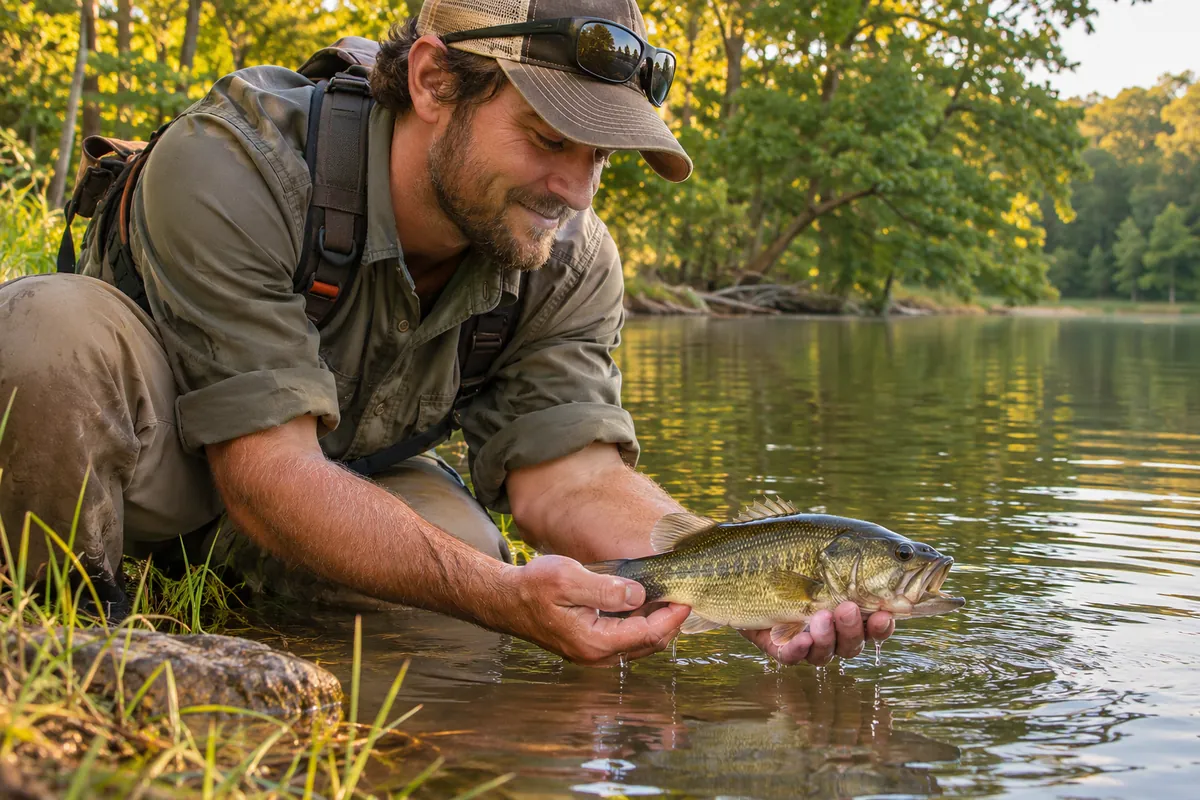
Letting a fish go doesn't guarantee it will survive. How you land, handle and release it makes a real difference. These practices come from state wildlife agencies and NOAA Fisheries.
Before you hook one
- Use circle hooks with bait, and consider pinching down barbs. Both make unhooking easier and reduce deep hooking.
- Use tackle strong enough to land fish quickly instead of fighting them to exhaustion.
- Have pliers and your camera ready before the fish is landed.
Handling
- Wet your hands before touching a fish. This protects its slime coat, which guards it against infection.
- Keep it in the water as much as possible. A good rule is to keep a fish out of the water no longer than you can hold your breath.
- Never put your fingers in the gills or eyes.
- Support larger fish horizontally under the belly instead of hanging them by the jaw.
- Use a rubber or knotless net if you net fish.
Unhooking
Back the hook out with pliers. If the hook is deep in the throat or stomach, cut the line close to the mouth. The fish has a better chance than if you tear the hook out.
Release
Hold the fish upright in the water, facing gently into any current, until it swims off on its own. Don't throw it back.
Hot water matters. Fish are more stressed in warm summer water. Keep fights short and air time even shorter.
Source guidance: NOAA Fisheries catch-and-release best practices (opens in a new tab) and state wildlife agencies.
Updated November 18, 2026. Fishing rules vary by state; check your state wildlife agency's current regulations.