Start Here · 2 min read
Your First Fishing Trip: A Step-by-Step Plan
Plan your first fishing trip from start to finish: what to buy, where to go, what to bring and what to do when you get to the water.
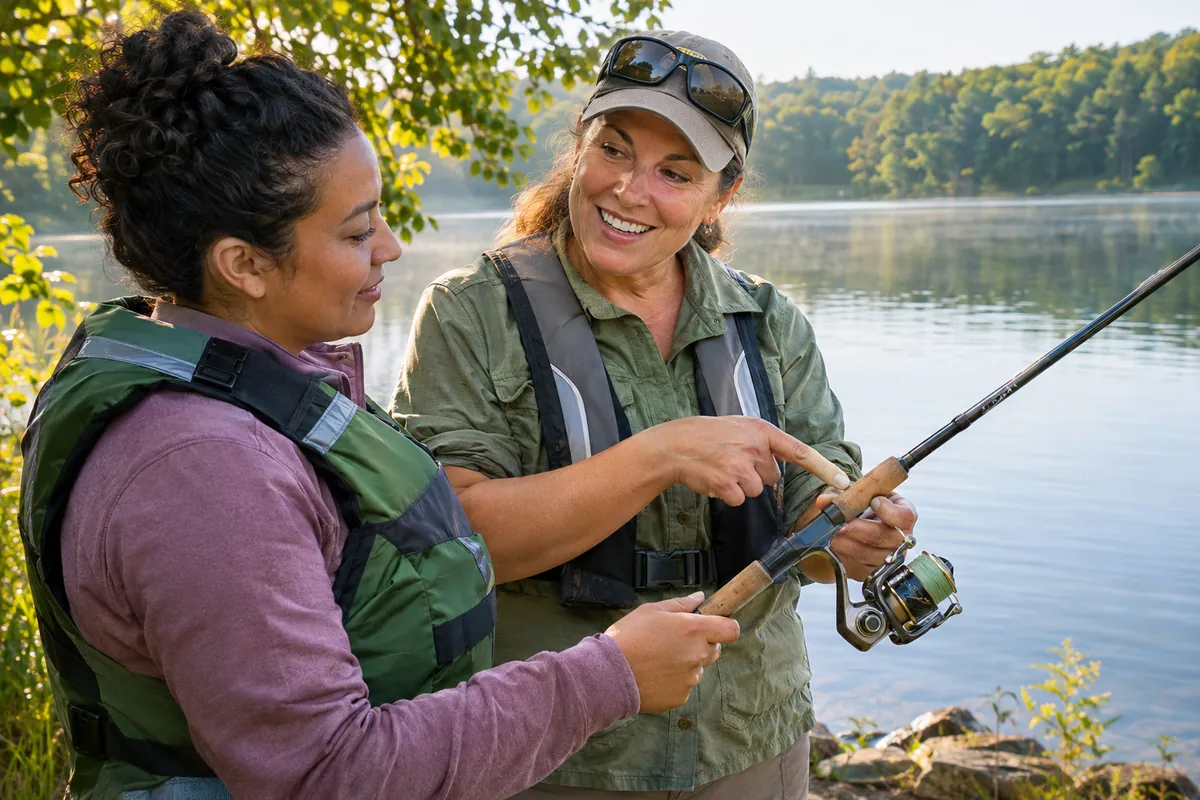
Your first fishing trip doesn't need a boat, a guide or expensive gear. A rod, a few hooks, some worms and a pond with a public bank are enough to catch fish on day one. Here's how to plan it.
1. Check the license rules
Most states require anglers 16 and older to carry a fishing license, though the age and the rules vary by state. Children are often exempt. You can buy a license online in a few minutes through your state's official wildlife agency. Read our license guide or go straight to the official state directory (opens in a new tab).
2. Pick an easy spot
For a first trip, choose a small public pond or lake with a fishing pier or open bank. Ponds hold plenty of bluegill and sunfish, which bite readily and are perfect for beginners. City and county parks, state parks and wildlife-agency "community fishing" ponds are all good choices. See how to find places to fish near you.
3. Gather simple gear
- A 5½ to 6½-foot spinning rod-and-reel combo, already spooled with 6 to 8-pound line
- A pack of small hooks (size 6 or 8)
- A few bobbers and split-shot sinkers
- Live worms or nightcrawlers
- Needle-nose pliers to remove hooks
- A bucket or small cooler, sunscreen, a hat and water
Our first-trip checklist covers everything, and you can tick items off as you pack.
4. Rig a bobber
Tie a hook to the end of your line with an improved clinch knot. Pinch one split-shot sinker on the line about 6 inches above the hook. Clip a bobber on the line 2 to 3 feet above the hook. Thread a small piece of worm onto the hook so the point is covered.
5. Cast near cover and wait
Cast a short distance toward weeds, a fallen log, a dock or the edge of deeper water. Let the bobber settle. When it bobs, dips or slides away, reel in any slack and lift the rod tip smoothly to set the hook. Then reel steadily. If nothing happens in 10 to 15 minutes, move a few yards and try again.
Tip: early morning and the hour or two before sunset are usually the best times to fish, especially in summer. Midday can still work in shade or deeper water.
6. Handle the fish with care
Wet your hands before touching a fish, keep it out of the water as briefly as you can and use pliers to back the hook out. If you're releasing it, set it gently back in the water. Our catch-and-release guide explains how to give fish the best chance of survival.
7. Know the local rules
Every state publishes fishing regulations that cover size limits, daily limits and seasons for different species. Some lakes and parks have their own rules too. If you plan to keep fish, check the regulations for that water before you go.
Next lessonFishing License Basics: Who Needs One and Where to Buy →Updated November 18, 2026. Fishing rules vary by state; check your state wildlife agency's current regulations.