Start Here · 2 min read
Fishing Safety: Life Jackets, Hooks and Weather
Fishing safety basics: life jacket rules, wading and bank safety, hook safety, sun and heat, and what to do in a storm.
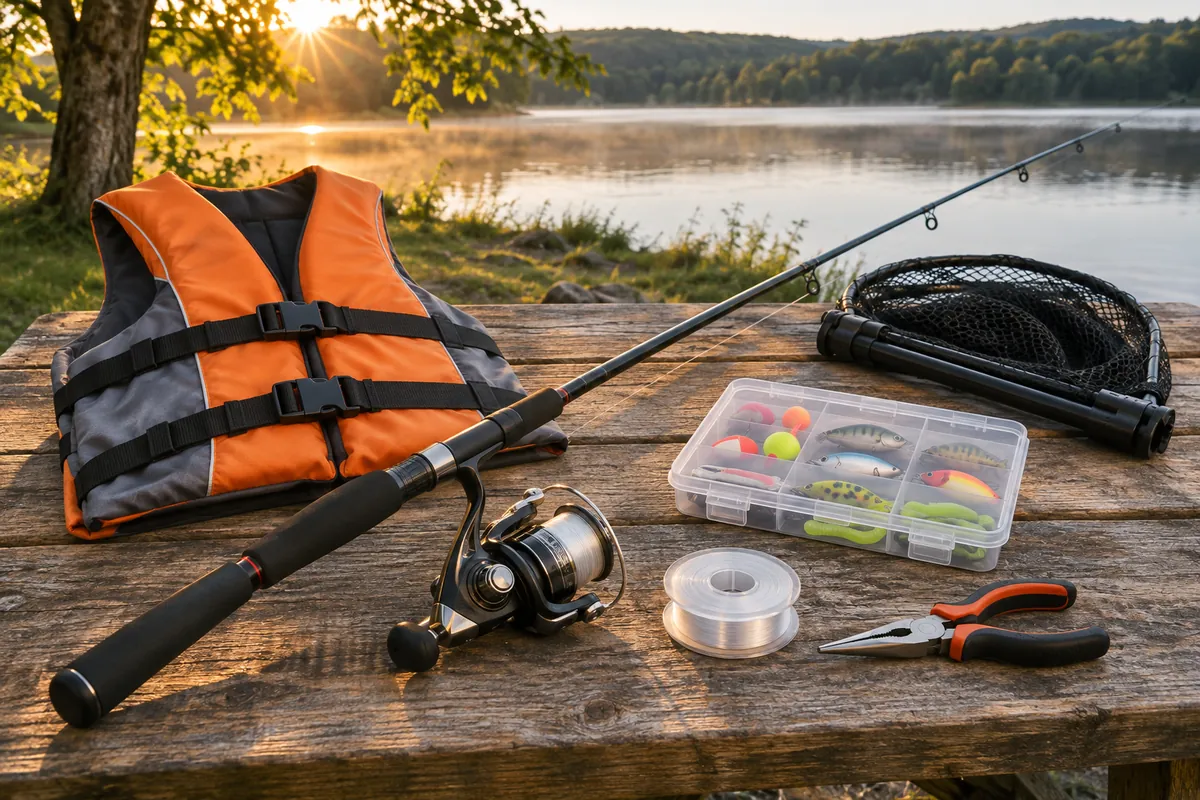
Fishing is a relaxing, low-risk hobby when you follow a few simple habits. These are the ones that matter most.
Life jackets
On a boat, federal law requires a Coast Guard-approved wearable life jacket of the right size for each person on board. On a moving recreational boat, children under 13 must wear one unless they're below deck or in an enclosed cabin, or unless your state sets a different age. The Coast Guard recommends that everyone wear a life jacket whenever the boat is underway. A life jacket is also smart for anyone, especially children and weak swimmers, fishing from docks, steep banks or while wading.
Around the water
- Watch for slippery rocks, steep or crumbling banks and sudden drop-offs.
- Never wade in fast or deep water, and use a wading staff on rocky bottoms.
- Fish with a buddy when you can, and tell someone where you're going.
- Keep children within arm's reach near the water.
Hooks
- Look behind you before every cast.
- Wear sunglasses to protect your eyes.
- Hook the bait or lure to the rod's hook keeper when walking.
- If a hook goes deep into skin, especially near the eye or face, get medical help.
Weather and sun
Leave the water at the first sign of lightning or thunder; a fishing rod can attract a strike. Wear sunscreen, a hat and light layers, and bring plenty of water on hot days. In cold weather, dress in layers and stay dry.
Learn more
The U.S. Coast Guard's boating safety site (opens in a new tab) explains life jacket and boat equipment rules, and your state wildlife agency lists local requirements.
Next lessonCatch-and-Release: How to Handle and Release Fish →Updated November 18, 2026. Fishing rules vary by state; check your state wildlife agency's current regulations.